
When Margaret wrote to me, one line stopped me in my tracks. I have outlived most of my friends, she wrote, and I am still here, at 92, learning how to do that well. Her honesty deserved a whole post, so I asked if I could share it, names changed, heart unchanged.
There is a particular grief that belongs to the very old. It is not one loss, it is a slow quieting of the phone, an address book full of crossed out names, and birthdays that nobody alive remembers with you.
Margaret agreed to share how she copes, in her own warm and unsentimental way. These are her 10 honest methods, with her words woven through, for anyone who is walking this road now or loves someone who is.
Quick Tips Before You Start
Before her 10 ways, Margaret asked me to pass on five small truths she repeats to herself. She says they help on the days when having outlived most of my friends feels heaviest.
- Grief is not a problem to solve: She lets a sad day be a sad day, and does not scold herself for it.
- Love does not retire: Her heart still makes room for new people, even now.
- Routine is a friend: Small daily anchors hold the day together when people cannot.
- Talking helps, even to empty rooms: She speaks to her friends in her head and out loud, and feels no shame in it.
- One pleasure a day is the rule: A flower, a cake, a song. She schedules joy like medicine.
1. I Start With the Truth, I Am Still Here
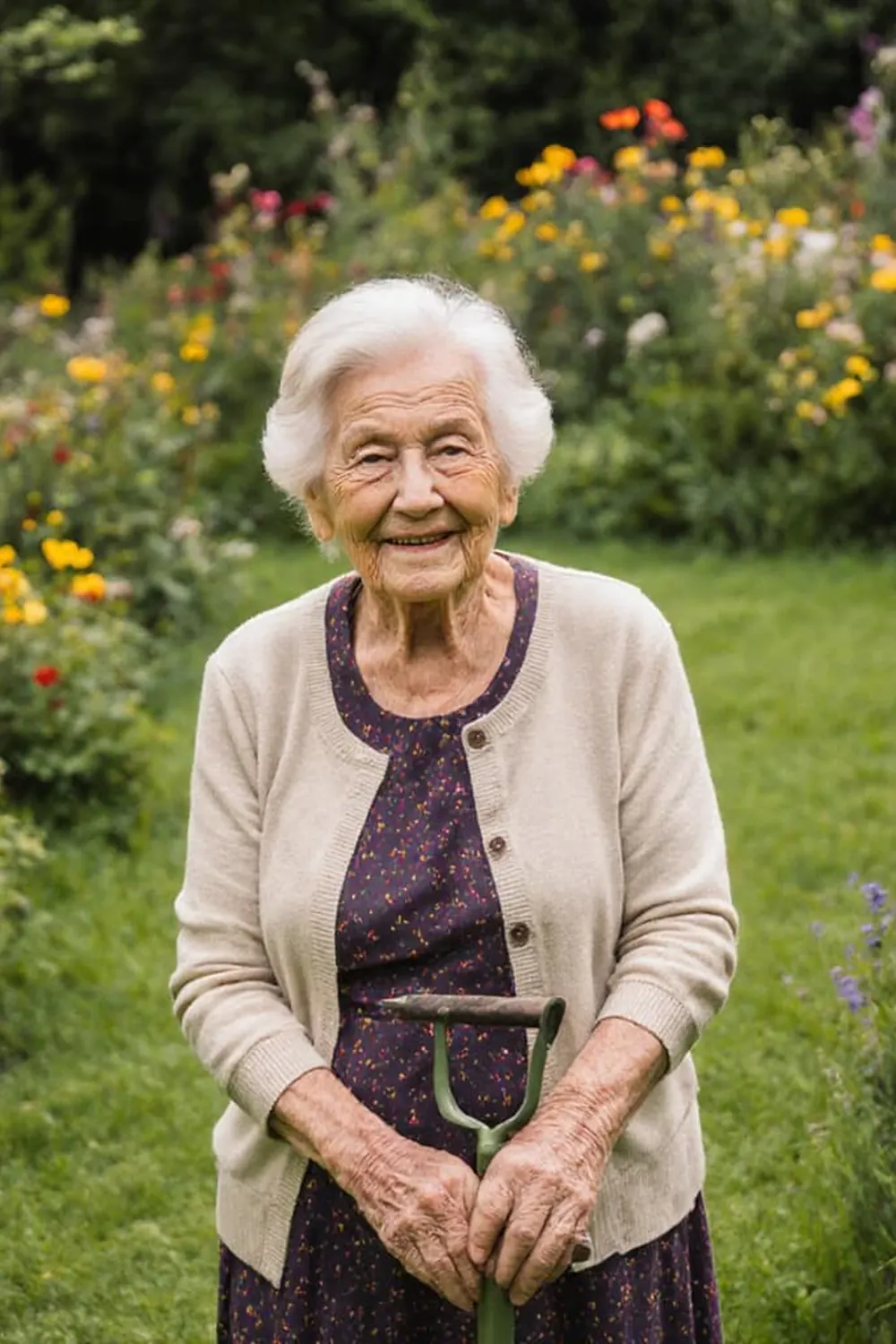
Photo by source page
Margaret begins here because denial exhausted her. Standing in her garden in the photo, fork in hand at an age when many people have surrendered their gardens, she told me she says the truth out loud each morning. My friends are gone, and I am still here, and today is still mine.
She does not mean it as toughness. She means it as permission. Accepting that she has outlived most of my friends, as she describes her situation to new acquaintances, freed her from waiting for life to feel like it used to.
Try this: Say one true sentence about your life each morning while the kettle boils. Naming the truth kindly takes away much of its power to ambush you later.
2. I Keep the Garden Going, One Bed at a Time

Photo by source page
Her friend Rose gardened beside her for forty years. When Rose died, Margaret nearly gave the garden up, because every row reminded her. Then she planted a bed of Roses favorites, sunflowers, and found that tending it felt like visiting.
Now the garden is her daily appointment with the living. Seeds do not care that she is 92. They come up anyway, and she says watching them is her proof that beginnings are not only for the young.
Try this: Keep one living thing that needs you, a garden bed, a pot of herbs, even a single tomato plant. Being needed by something green is gentle, daily purpose.
3. I Give Every Day One Small Job

Photo by Halowies
Watering, deadheading, feeding the birds. Margaret keeps a mental list of small jobs, one for every day, because empty days stretch and ache. A day with a job in it, however small, has a spine.
She is honest that some jobs are invented. The bird bath does not need cleaning every Tuesday. But the ritual of usefulness keeps despair from settling, and she guards it fiercely.
Remember: Purpose does not have to be grand to be real. A small job done daily will hold a life together better than a big plan made once.
4. I Let Books Keep Me Company

Photo by Assisted Living Magazine
Margaret reads the way other people visit. A novel gives her new people to care about, and rereading old favorites is, she says, like sitting with friends who cannot die twice. Her reading chair by the window is the coziest seat in her house.
She keeps a notebook of lines she loves and reads them aloud sometimes. Hearing her own voice in a quiet house matters more than she expected.
Try this: Reread a book you loved at 30. You will meet your younger self in the margins, and that is a friendship worth keeping too.
5. I Keep Learning, Slowly and Stubbornly

Photo by Vernon Lions Club
At 92 she is learning the names of birds, properly this time, with a guidebook and strong glasses. Learning gives her future tense sentences. Next spring I will watch for the swallows, she says, and means it.
She told me that curiosity is her private rebellion. The world assumes a woman who has outlived most of my friends has finished becoming. She takes real pleasure in proving it wrong, one bird at a time.
Watch out: Do not wait to feel energetic before learning something small. Interest usually arrives after you start, not before.
6. I Let New People Sit at My Table

Photo by source page
This one took her years. Accepting new friends felt, at first, like betraying the old ones. Then a neighbor began bringing soup, and a lady from church kept staying for tea, and Margaret understood that her table had room that her heart could learn to use.
Her new friends are in their seventies and eighties, a whole generation younger, and she delights in them without comparison. They are not replacements. They are simply the next chapter of company.
Say this: When someone offers company, practice saying, I would like that, come on Thursday. A specific yes opens doors that a polite maybe keeps closed.
7. I Laugh at the Table, Even Now, Especially Now

Photo by source page
Her remaining friends and her newer ones share a rule at the table. The dead are talked about with love and with jokes, because that is how they were loved in life. Stories about them are told until the whole table is laughing through tears.
Margaret says laughter is how she proves to herself that grief has not eaten the whole house. It lives in one room. The kitchen still belongs to joy.
Remember: Laughing about a lost friend is not disloyal. It is one of the purest forms of remembering them exactly as they were.
8. I Walk Every Day My Legs Allow

Photo by source page
Her walk is short now, a loop of the park path, but she protects it like an appointment with royalty. Neighbors wave, dogs know her, and the lady on the bench saves her end of the seat. A walk, she says, is society and medicine in one outing.
On days her knees refuse, she walks to the gate and back and counts it without shame. She has buried too many friends who would give anything for her slow loop to waste it on pride.
Try this: Give your walk a social anchor, the same time, the same bench, a wave you owe somebody. Obligation to a bench buddy gets you out on grey days.
9. I Have Made Peace With Quiet

Photo by source page
Some walks are solitary, and some evenings are long, and Margaret stopped fighting that. She distinguishes, carefully, between loneliness and quiet. Loneliness is an ache. Quiet is a room she has learned to furnish with music, radio voices and her own thoughts.
She told me the turning point was realizing that being alone at 92 is not a verdict on her lovability. It is arithmetic. She has simply been here longer, and there is no blame in arithmetic.
Watch out: If quiet ever tips into days of not eating, not dressing or not answering anyone, that is no longer quiet. That is the moment to call family or a doctor and say so plainly.
10. I Let Family Be My Present, Not Just My Past

Photo by Ideal Health Partners
Her grandchildren and great grandchildren are not, she insists, consolation prizes. They are the living front edge of her life, and she invests in them fully, learning their games, their jokes and their favorite biscuits, instead of only telling them about the old days.
She saves her stories for when they ask, and they do ask, because she is interesting rather than insistent. That, she says, is how a woman who has outlived most of my friends becomes a legend instead of a warning.
Say this: Ask a grandchild to teach you something, a card game, a phone trick, a song. Being teachable keeps you in their present tense, where love actually lives.
Frequently Asked Questions
Is it normal to feel guilty for still being alive at 92?
Margaret says yes, and that most very old people feel it quietly. Survivor guilt visits almost everyone who has outlived most of my friends and family. It softens when it is spoken aloud to family, a friend or a counselor instead of carried in silence.
How can I help a parent who has lost most of their friends?
Visit in person when you can, call on a predictable rhythm, and ask about the friends by name. Hearing a lost friend name spoken by someone else is a deep comfort. Help them build small new connections too, a lunch club, a church group, a neighbor ritual.
What is the difference between grief and depression in very old age?
Grief comes in waves and still allows moments of warmth and laughter. Depression flattens everything, appetite, sleep, interest and hope, for weeks at a time. If that flatness settles in, a doctor visit is not weakness, it is good housekeeping for the mind.
Can you really make new friends in your nineties?
Margaret did, mostly in her late eighties, through tea invitations, church and one persistent neighbor. New friends at this age form fast, she says, because nobody is wasting time on pretending. Start with one repeated small gathering and let familiarity do the work.
Still Here, Still Herself
Take one small action step today, whether you are 92 or love someone who is. Make one call, accept one invitation, or plant one thing. Margaret story is not really about loss. It is about a woman who has outlived most of my friends, as she puts it, and still gets up and chooses her day on purpose.
If family closeness is part of your own story, you may like reading about why adult children feel guilty visiting parents and our gentle guide to how estranged parents reconnect. Margaret would approve of both. She believes most doors are less locked than they look.